.png)
UK Private School Scholarships and Bursaries in 2026: A Complete Parent's Guide
- ukindepschool
- Jun 6
- 5 min read

Here is a truth that the independent school sector does not always communicate clearly enough: financial support is available at a scale that most families simply do not know about. We regularly work with families who have ruled themselves out of private school consideration on income grounds, only to discover that a combination of scholarship and bursary support would have made it financially viable.
This guide is for those families. It explains the difference between scholarships and bursaries, who is eligible, what a strong application looks like, and how to approach the process strategically.
Scholarships vs Bursaries: A Critical Distinction
These two terms are often used interchangeably, but they are fundamentally different in how they work:
A scholarship is awarded on merit — academic ability, excellence in music, sport, art, drama or another area. It is typically worth between 5% and 25% of tuition fees at most schools, though some prestigious awards are worth significantly more. Scholarships confer status and recognition as much as financial benefit, and they are typically assessed through a competitive process.
A bursary is awarded on the basis of financial need, usually assessed through a means test. A bursary can cover anywhere from 10% to 100% of fees. Some schools offer fully funded places for families who cannot contribute at all. Bursaries are means-tested and are reviewed annually — your award may change if your financial circumstances change.
The powerful combination: Many schools offer scholarship-plus-bursary awards. A child who wins a music scholarship (worth, say, 20% of fees) may then be eligible to apply for a bursary on top of that scholarship, potentially reducing the net cost to the family very substantially. This combined route is worth exploring at every school on your list.
Who Qualifies for a Bursary?
Eligibility varies by school. There is no national standard. Each school determines its own means-testing process and its own threshold for support. However, there are some general patterns:
Most schools that offer substantial bursaries will consider families with annual household incomes up to £70,000–£100,000, depending on the school and the number of dependants.
Some of the most well-endowed schools — particularly those in the HMC (Headmasters' and Headmistresses' Conference) — will consider applications from families with higher incomes if other circumstances (significant outgoings, caring responsibilities, disability) are relevant.
Families in genuine financial hardship — those affected by bereavement, illness, redundancy, or relationship breakdown — are often prioritised.
The means-testing process typically requires:
Two to three years of tax returns (SA302 forms or employer references)
Evidence of all income sources, including self-employment, rental income, savings and investments
A statement of outgoings and any exceptional circumstances
In some cases, a home valuation (the value of your property is factored in at some schools)
This can feel invasive, and many families are put off by it. My advice: the discomfort of disclosure is short-lived. The financial impact of a substantial bursary award is life-changing.
Scholarship Types: What Schools Are Looking For
Academic Scholarships The most common type. Assessed through written examinations (often similar in content to, but more demanding than, the standard entry examination), and frequently followed by an interview. Schools are looking for genuine intellectual curiosity, not just ability to score well on practice papers. The strongest academic scholarship candidates are children who read widely, ask good questions, and enjoy intellectual challenge for its own sake.
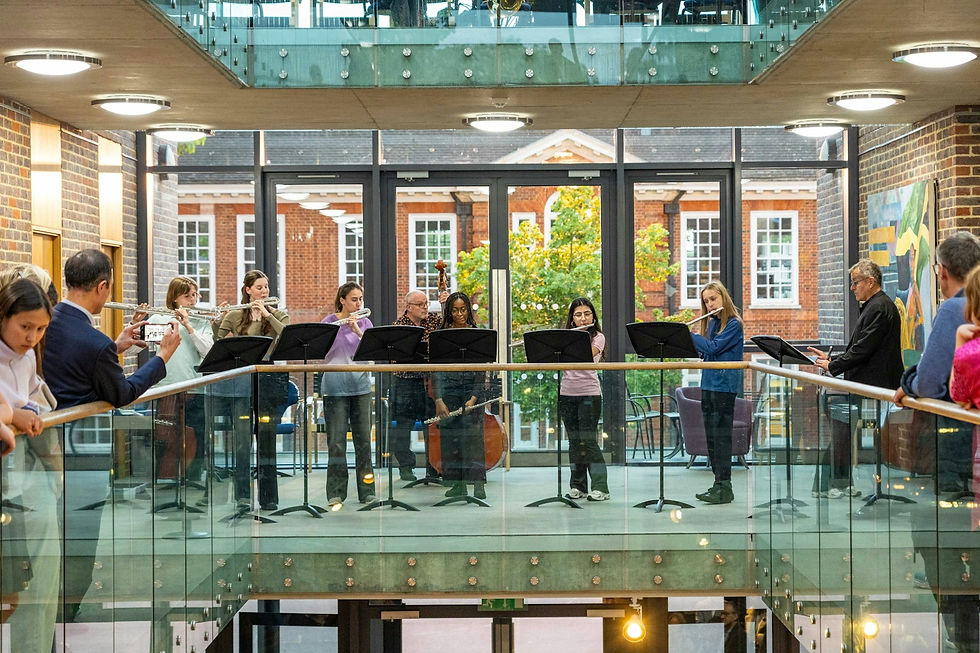
Music Scholarships Highly competitive and genuinely life-changing for musically gifted children. Most schools with strong music programmes offer awards at 11+ and 13+. Assessment typically involves performing two contrasting pieces on the principal instrument, sight-reading, an aural test and a short interview with the Director of Music. A distinction-level grade on a second instrument significantly strengthens an application. If your child plays at a high standard, apply — music scholarships are systematically under-applied for relative to academic scholarships.
Sport Scholarships Available at many schools, particularly boarding schools with strong sporting traditions. Assessment is often school-specific: trial sessions, reference from a current coach, and evidence of representative honours (county, regional or national level). Sport scholars are typically expected to contribute to the school's teams throughout their time at the school.
Art, Drama and All-Rounder Scholarships Less common but available at many schools. Art scholarships typically require a portfolio submission plus a practical session. Drama scholarships involve a performance, often including a prepared monologue and an unseen piece. All-rounder scholarships recognise children who excel across multiple domains without reaching the threshold for a specialist award.
How to Build a Winning Bursary Application
A bursary application is not merely a form-filling exercise. It is a case for your child being part of that school community. The most successful bursary applications I have seen share several common characteristics:
1. Apply early. Most schools have limited bursary funds, and they allocate them on a rolling or competitive basis. Applying close to the deadline significantly reduces your chances, even if you are eligible.
2. Be comprehensive and honest in your financial disclosure. Inconsistencies or omissions in financial documentation are red flags for schools. If your circumstances are complicated — self-employment, a family business, assets abroad — include a clear explanatory letter alongside the documentation.
3. Write a personal statement that is genuinely compelling. Most bursary applications include a written submission from parents explaining why they are applying and why the school is right for their child. This is not the place for generic praise of the school. Write specifically: why this child, why this school, why now.
4. Request a meeting with the Director of Admissions. Many families do not realise this is possible or appropriate. It is both. A brief, well-prepared meeting allows you to present your case directly and to ask questions about the school's financial support philosophy. It also begins a human relationship with the admissions team.
5. Know the school's bursary philosophy. Some schools prioritise fully funding a small number of exceptional children who could not otherwise access private education. Others spread support more broadly across a larger number of families. Understanding a school's philosophy helps you calibrate your application and your expectations.
Which Schools Have the Most Generous Support?
The schools with the largest endowments and the most established bursary programmes include many of the most prestigious names in UK independent education. Winchester College, Eton, Dulwich College, Christ's Hospital, The Royal Grammar School Guildford and Manchester Grammar School are among those with long-standing, well-funded bursary traditions. Christ's Hospital in particular offers a distinctive model specifically focused on pupils from low-income families.
This means that some of the UK's most academically ambitious schools are also, paradoxically, some of the most financially accessible — if you know how to apply.
Common Mistakes to Avoid
Assuming you earn too much. The means-testing threshold is higher than most families expect, and unusual outgoings or circumstances are taken into account.
Applying to too few schools. Apply to several schools simultaneously. Bursary funding is school-specific, and you have no guarantee any one school will offer sufficient support.
Missing scholarship registration deadlines. Scholarship assessments happen earlier in the admissions calendar than standard entry. Check the timeline for each school individually.
Coaching a child specifically for scholarship interviews. Schools can spot over-coached children, and it rarely helps. Prepare your child to be themselves, to talk about what genuinely interests them, and to engage openly with questions they cannot immediately answer.
The financial support landscape in UK independent education is genuinely more generous than most families realise. With the right preparation and the right approach, it can open doors that seemed firmly closed.


Comments